Define your collection
Share your customer, sales channel, target price, product categories, size range, quantity and launch date.

PRIVATE LABEL · UNITED STATES
RUIXING helps babywear brands develop custom rompers, pajamas, bodysuits, sleep bags and coordinated collections with low MOQ, private labels, packaging, quality control and destination-market testing support.
Request a private-label quote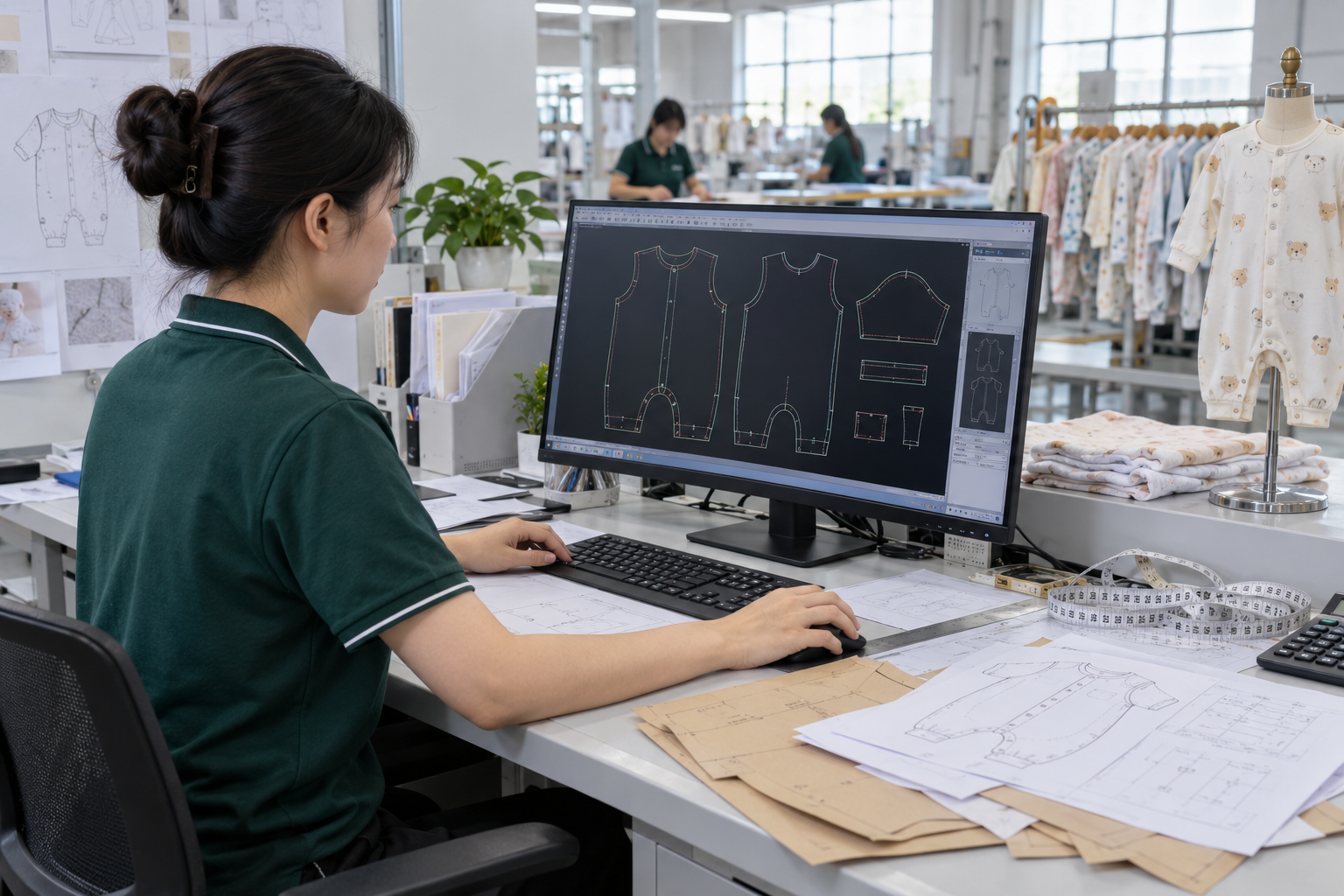
FOR STARTUPS AND GROWING BRANDS
A private-label program is more than adding a logo to an existing garment. The product, material, fit, artwork, labels, packaging and quality standard must work together. Our team organizes these decisions around one approved sample and specification set.
For US brands, destination-market requirements should be discussed at the beginning. We help clarify product information, coordinate testing where required and prepare production around the approved material, construction and packing standard.
Share your customer, sales channel, target price, product categories, size range, quantity and launch date.
Compare bamboo viscose, rib, modal or organic cotton, then confirm colors, repeat prints and trim direction.
Review fit, measurements, construction, print scale, label placement and packaging through consolidated feedback.
Lock the approved sample, measurement chart, artwork, color, labels and packing instructions before bulk production.
Control fabric, cutting, sewing, measurements, closures, appearance, packing and final order preparation.
US MARKET READINESS
Testing is not a single certificate that applies to every style. The correct scope depends on the product type, age group, fabric, trims, intended use and destination market.
FROM PRODUCT BRIEF TO A COMPARABLE QUOTE
Give each supplier the same brief so price comparisons reflect the same garment. A complete technical pack is helpful, but a startup can begin with references and a clear list of decisions still to be made. Mark each style with a reference number and keep the latest files dated.
For a bamboo babywear order, “soft bamboo fabric” alone is not a production specification. Confirm the actual fiber blend, knit structure, fabric weight and stretch expectations with physical swatches. Review our bamboo babywear manufacturing guide and sampling preparation checklist before sending your brief.
A first sample helps review fit and construction. Send one consolidated revision list with annotated photographs and measurement results. Confirm corrected details in the next sample rather than assuming written comments have already been incorporated. Keep the latest sample and file versions connected.
Review a physical color or print standard, print repeat and scale, closure function, label position and retail packing. If a sample uses substitute fabric or trims, record the substitution and confirm the final material separately. A fit approval does not automatically approve every production component.
Ask whether the quoted price includes labels, hangtags, individual packaging and inspection. Request separate details for development fees, print setup, material or packaging minimums, testing, freight and the agreed shipping term. Confirm quote validity and the quantity assumptions; changes to fabric, artwork or size mix can change the cost.
Our standard 3–7-day sample timing depends on confirmed details and material availability. Custom fabric, print development, revisions or additional testing may need longer. Before paying for bulk production, agree which sample and dated documents govern the order, what remains open and how any later change will affect price and timing.
US BRAND QUESTIONS
Yes. We support both growing and established brands. A focused first collection with clear styles, quantities and launch timing is usually the most efficient starting point.
We can support product development, fabric sourcing, custom colors and prints, pattern and sample development, woven or heat-transfer labels, hangtags, packaging and final inspection.
Please share the product type, reference images or technical pack, target fabric, size range, estimated quantity, branding requirements, US sales channel and target delivery date.
We can coordinate applicable material or finished-product testing and documentation through qualified testing partners. The exact scope depends on the product, age group, materials and US market requirements.
The typical starting point is 50 pieces per style, subject to fabric, print, color, size ratio and packaging. Some custom developments may require a higher practical minimum.
You can start with clear reference images or a reference garment, the intended size range, fabric direction and quantities. Identify missing measurements and construction decisions before sampling; an early estimate should be reconfirmed once the specification is stable.
Approve the production sample, dated measurement chart and tolerances, fabric and color standards, print artwork, trims, label placement and packing instructions together. Record any outstanding testing or documentation requirements separately and resolve them before the relevant production or shipment stage.
Not necessarily. Custom fabric, print, labels and packaging can each have separate supplier minimums or setup costs. Ask for these quantities and costs to be itemized before comparing quotations.
Browse our babywear collection guide, review the focused custom bamboo baby zippy romper program, compare baby clothing OEM and ODM services, see how to plan a low-MOQ babywear launch, check the US baby clothing compliance guide, review the development process, and read our private-label MOQ and sampling guide.
Send your product brief