Choose one lead product
Start with the style most likely to solve a real customer need, then add only products that fit the same collection and material direction.

FOR STARTUPS · LOW MOQ · PRIVATE LABEL
RUIXING helps startup founders turn a reference, sketch or early idea into production-ready babywear. Develop custom rompers, pajamas, bodysuits and sleep products with practical MOQ planning, fast sampling, private labels and packaging.
Request a startup quotation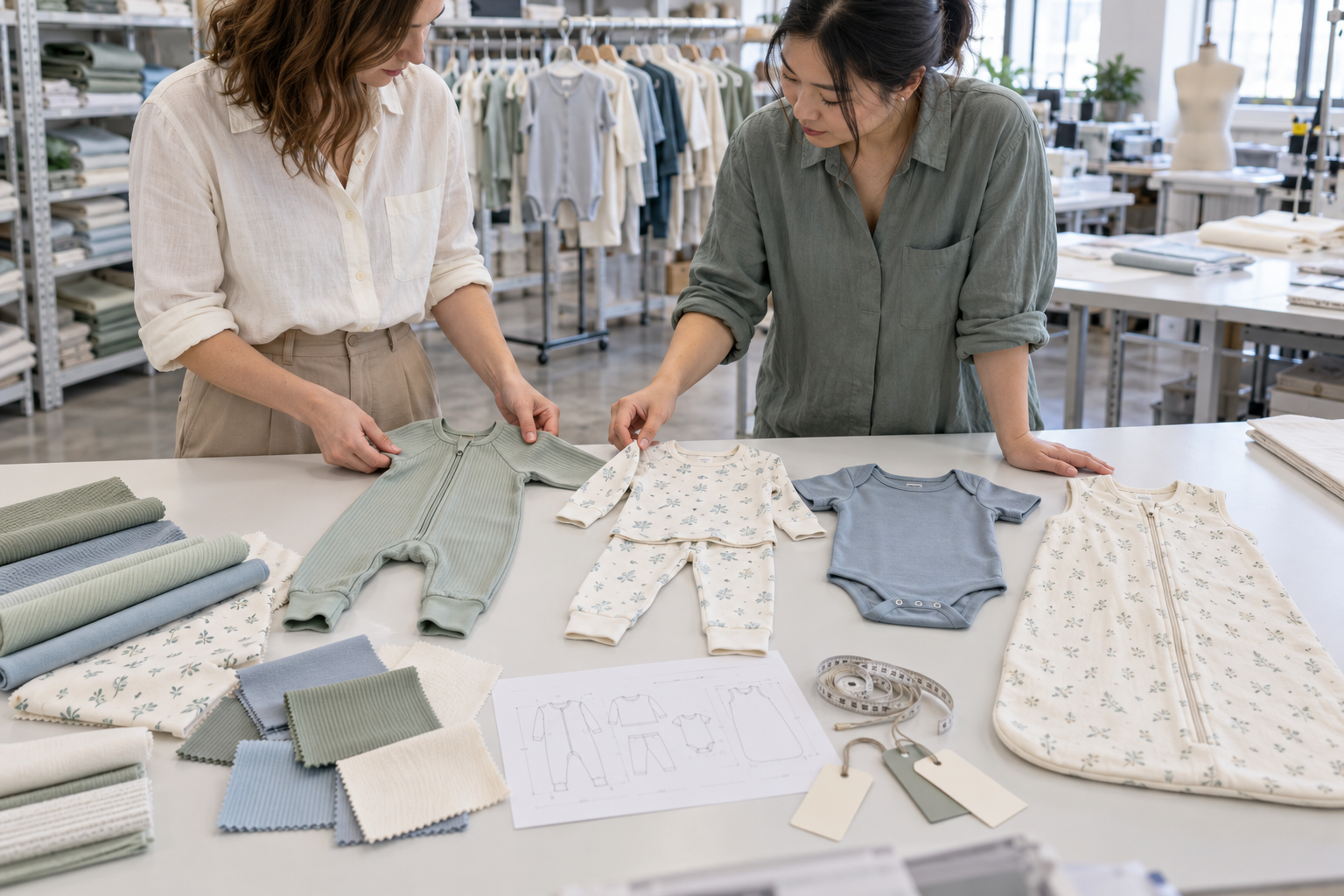
START SMALL, BUILD CLEARLY
New baby clothing brands often begin without a complete tech pack or a large purchasing team. The first job is to turn the idea into a clear specification: customer, product use, fabric, measurements, construction, artwork, branding, quantity and delivery target.
We review those decisions together before production. This gives you a comparable quotation, a sample with a defined purpose and a record that can support future reorders.
Start with the style most likely to solve a real customer need, then add only products that fit the same collection and material direction.
Define fabric, GSM, sizes, measurements, print, trims, labels, packaging, quantities and target market before comparing prices.
Review fit, construction, color, artwork and branding against written comments. Record every approved detail before bulk production.
Keep core fabrics and components consistent, document the final specification and expand from sales evidence instead of guesswork.
STARTUP-FRIENDLY PRODUCTS
A smaller, coherent launch is easier to explain, photograph, test and reorder. Share your audience and sales channel so we can recommend a practical construction and fabric direction.
YOUR FIRST QUOTATION
1. Product or reference image · 2. quantity per style and color · 3. requested sizes · 4. fabric or hand-feel preference · 5. custom print, label and packaging needs · 6. destination and target date.
Your quotation should separate garments, samples, custom material or artwork setup, labels, packaging, testing, inspection and freight where applicable. Compare the full scope—not only the lowest unit price.
BEFORE SAMPLE PAYMENT
A sample charge can cover different work at different factories. Ask for a written scope before paying: sample type, pattern work, fabric source, custom print or color setup, trims, labels, packaging, courier cost, target timing and the revision policy.
Separate corrections from design changes. A correction brings the sample back to the agreed brief; a design change alters the brief and can affect price and timing. Keeping those categories clear helps a startup control development cost.
Clarify whether the order is for a development, fit, print, size-set or pre-production sample and what each stage is expected to prove.
Use one numbered comment sheet for measurements, construction, fabric, color, artwork, labels and packaging so changes remain traceable.
Identify pattern, garment, material setup, print, labels, packaging, testing, courier and any credit terms instead of relying on one unexplained total.
Sample timing should begin after the fabric, measurements, artwork and construction details needed for that stage are confirmed.
BEFORE BULK DEPOSIT
The production quotation should point to an approved product standard and a clear commercial scope—not only a reference image.
US MARKET PLANNING
Baby and children's products sold in the United States may be subject to product-specific testing, tracking-label and certification requirements. The applicable rules depend on the product, intended age, materials and classification.
RUIXING can support documentation organization and third-party testing coordination for the agreed product plan. The importer should confirm its own legal obligations before placing the product on the market.
STARTUP QUESTIONS
Our typical starting MOQ is 50 pieces per style for selected products. The final minimum depends on fabric availability, color or print, trims, size split and packaging. Send a quantity matrix so we can confirm the practical MOQ in writing.
No. A reference photo, target customer, approximate quantity, size range, fabric preference and target date are enough to begin. We can help organize the product brief before sampling.
Choose one product with a clear customer use case and repeat-purchase potential. Bamboo zipper rompers, fitted pajamas, bodysuits and sleep bags are common starting points, but the right choice should follow your audience and sales channel.
Yes. Private labels, care labels, hangtags, custom prints, colors and retail packaging can be developed. Each item should be quoted with its setup cost and supplier minimum.
A standard sample is typically completed in approximately 3–7 days after measurements, fabric, artwork and construction details are confirmed. Custom knitting, dyeing or printing can add time.
We can help organize product information and coordinate third-party testing for the agreed product plan. The US importer or domestic manufacturer remains responsible for identifying applicable rules and issuing the Children's Product Certificate from compliant test results.
Send the product type or reference, quantity by style and color, size range, fabric preference, print or color artwork, branding and packaging needs, destination country and target delivery date.
Yes. Approved specifications, artwork, measurements and material details make reorders easier. Fabric availability, current costs, MOQ and lead time should be reconfirmed for every order.
Confirm the product brief, sample type, fabric and trims, branding scope, sample price, delivery cost, expected timing, number of included revisions and what happens if the design changes after work begins.
No. Sample development and bulk production are separate stages. Ask whether the quotation includes pattern work, fabric or print setup, labels, freight and revisions, and whether any amount may be credited against a qualifying bulk order.
Approve the sealed sample, measurement chart and tolerances, bill of materials, colors or artwork, labels, packaging, quantity matrix, inspection method, production lead-time assumptions and payment terms in writing.
Send the same brief to each supplier and compare the same scope: fabric composition and GSM, construction, trims, quantities, sample terms, labels, packaging, testing, inspection, freight terms and lead-time assumptions.
Review our low-MOQ planning guide, private-label service for US brands, bamboo babywear capabilities, product catalogue, OEM/ODM process and US compliance guide.
Send your idea, quantity and target date