
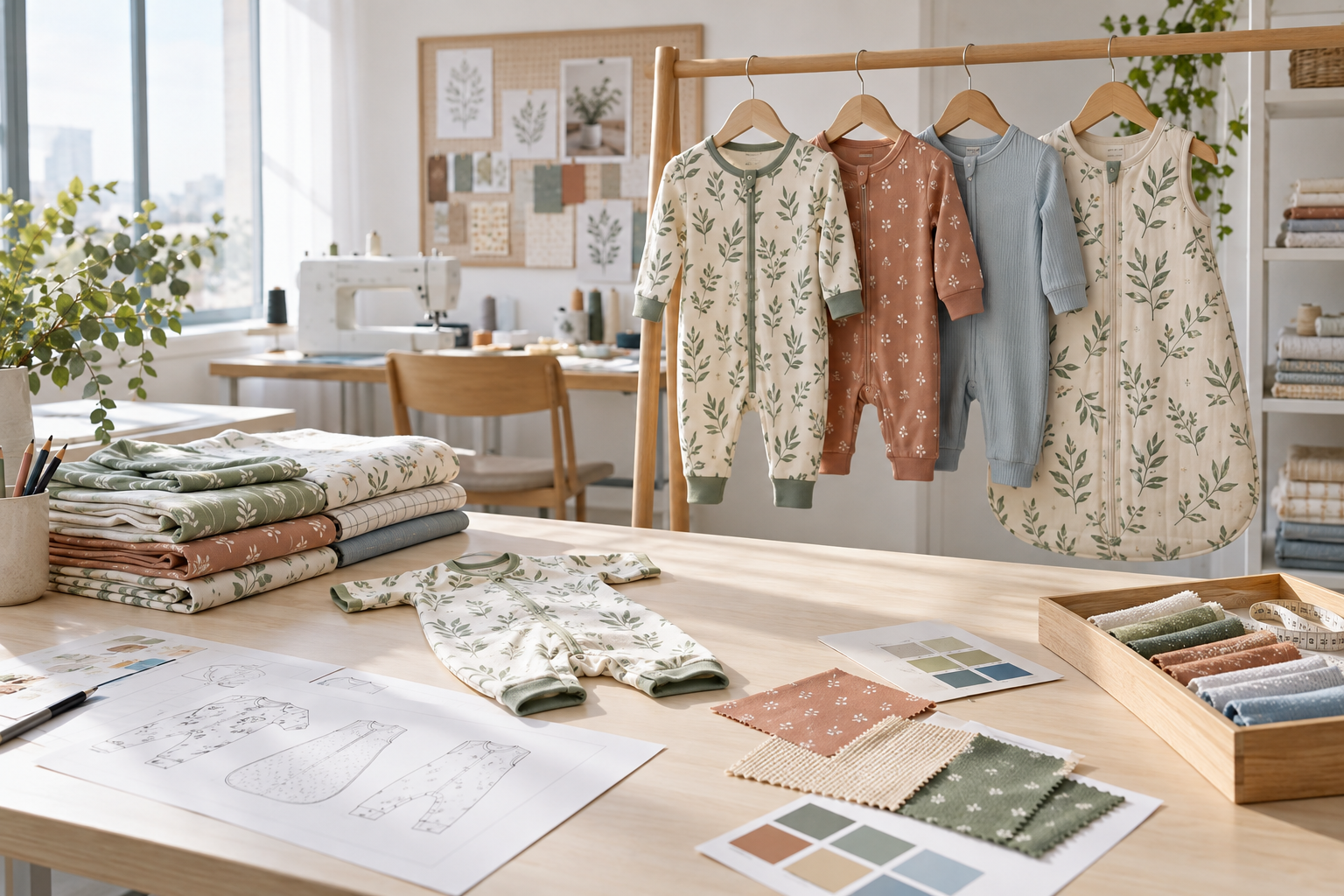
A new babywear idea does not need to begin with a large collection or a warehouse full of stock. Brands can reduce inventory risk by narrowing the first launch, validating the product specification and ordering a controlled pilot run designed to produce useful sales and customer feedback.
Start with one product question, not a full collection
Define the single assumption you need to test. It may be demand for a new bamboo romper shape, a print direction, a price point, a sleepwear feature or a gift-set format. A focused question keeps the first order small and makes the result easier to interpret.
Choose one hero style and limit variables
A pilot becomes difficult to read when too many styles, fabrics, colors and closures change at once. Select one hero product, a practical size range and one or two coordinated color or print directions. Keep the fabric and construction consistent so customer response is tied to a clear product.
Validate the sample before discussing bulk quantity
Review fit, measurements, fabric composition, GSM, stretch, recovery, shrinkage, print scale, closures, labels and packaging against one written specification. Sample approval is not only about appearance; it creates the production standard used for the pilot order and later scaling.
Use low MOQ as a testing tool
A low-MOQ baby clothing manufacturer can help a startup place a controlled first order, but the lowest possible number is not always the lowest-risk decision. Confirm fabric minimums, print method, size ratio and packaging costs, then choose a quantity that can be produced consistently and sold within a realistic launch period.
Plan the size ratio from evidence
Avoid dividing every size evenly by default. Use previous sales, wait-list responses, preorder data or the age profile of your audience. If no data exists, keep the initial size range tighter and document the assumption so the next order can be adjusted from actual results.
Collect feedback that changes the next order
Track conversion, sell-through by size, returns, fit comments, fabric feedback and repeat purchase interest. Separate product feedback from marketing performance: weak sales may come from the offer or traffic, while repeated fit comments usually point to the product specification.
Scale only what the pilot has proven
Reorder the strongest sizes and variants first. Add matching products only after the hero style shows demand and the production standard is stable. This staged approach can turn one validated babywear product into a coordinated collection without committing inventory to every idea at once.
FREQUENTLY ASKED QUESTIONS
Questions buyers ask
What is a practical MOQ for testing a new babywear style?+
Selected babywear products may start from around 50 pieces per style, but the workable MOQ depends on fabric availability, custom color, print method, size ratio, labels and packaging.
Should a startup launch several babywear styles at once?+
Usually it is safer to begin with one hero style and a limited number of variants. This makes demand, fit and size feedback easier to interpret before expanding the collection.
Can preorders remove all inventory risk?+
Preorders can provide demand signals, but brands still need realistic sample approval, production timing, quality control and customer communication. They reduce uncertainty rather than eliminating it.
What should be measured after a pilot launch?+
Track sell-through by size and variant, conversion, returns, fit comments, fabric feedback and requests for related products. Use these results to plan the reorder.