
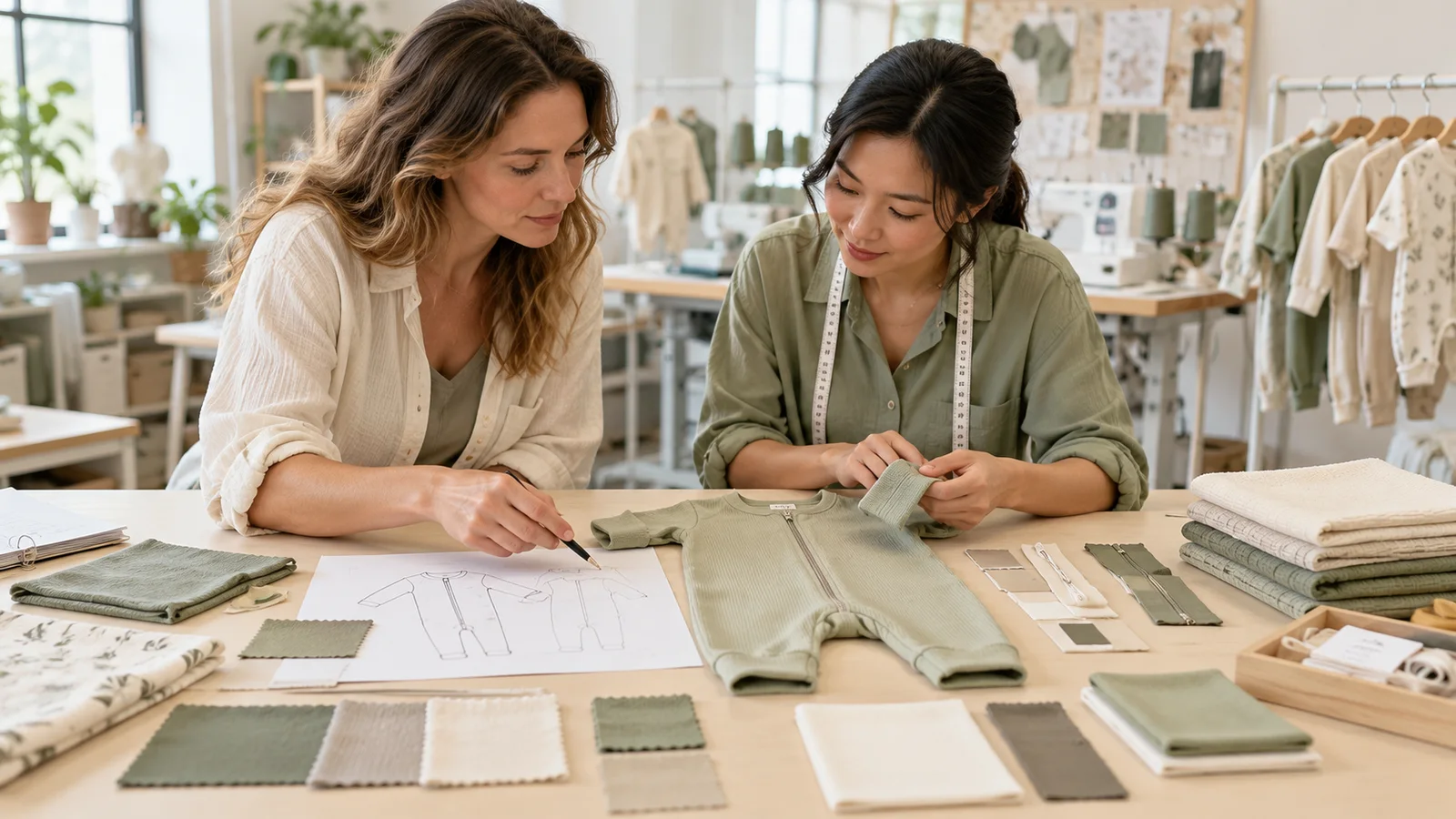
You do not need every technical detail finalized before starting a babywear collection. Many startup founders know the style, customer and brand feeling they want, but are unsure about fabric GSM, measurements, construction, trims or packaging. RUIXING's babywear product development service helps turn that early idea into a clear, sample-ready specification.
Why new babywear brands often get stuck before sampling
A founder may have reference photos, a sketch or a clear customer in mind but no complete tech pack. That gap can make fabric composition, GSM, sizing, zipper type, stitching, labels, testing and packaging feel like separate technical problems. An experienced custom baby clothing manufacturer should organize these decisions into one development path instead of expecting a startup to arrive with every answer.
Start with your product idea, not a perfect tech pack
A simple brief is enough to begin. Share the product category, target customer, selling market, preferred material, reference images, estimated quantity and price direction. A statement such as 'a soft bamboo zipper romper for babies aged 0–24 months with a modern print and two-way zipper' already gives the development team a practical starting point.
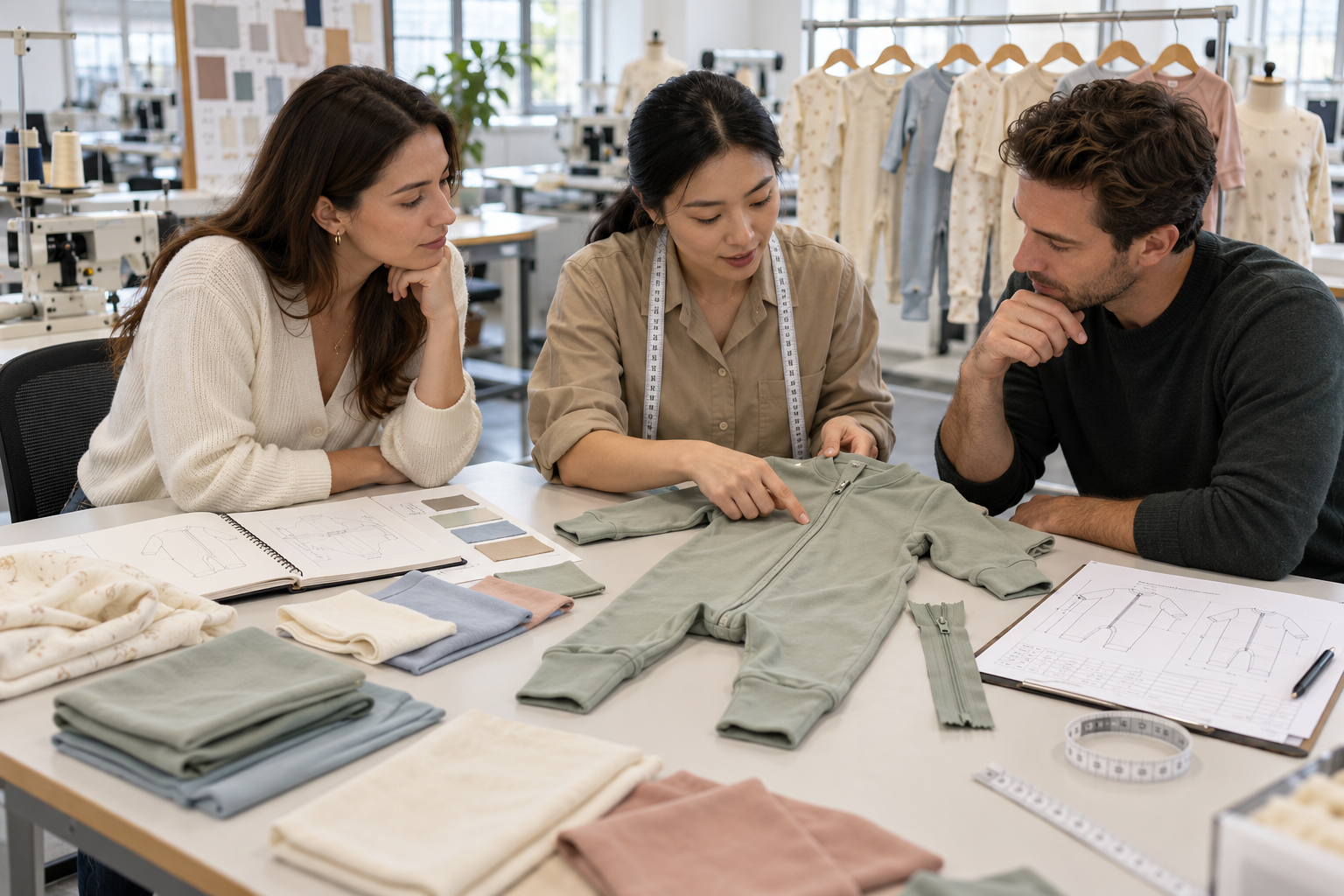
What you provide now—and what RUIXING helps complete
At the first inquiry stage, the brand can provide the commercial direction: who the product is for, where it will be sold, the intended product category, visual references, approximate quantity, target price and launch timing. RUIXING can then help define the manufacturing details that are still open, including suitable fabric options, GSM, base measurements, construction, closure and trim choices, print application, label placement and packaging. The information does not need to arrive all at once; it needs to become controlled before sample approval and production.
Turn the idea into a production-ready specification
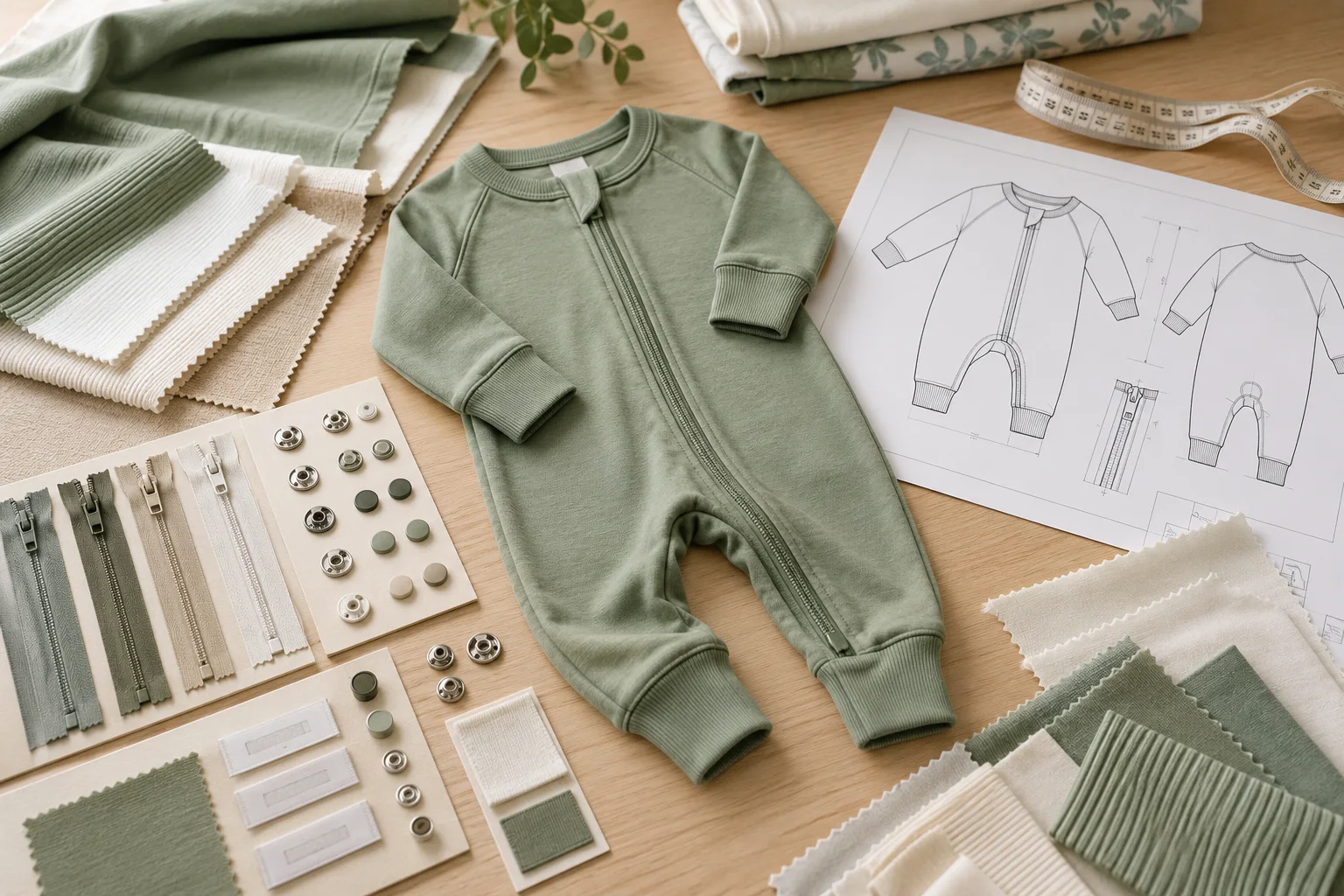
RUIXING can help translate the concept into decisions about fabric composition and weight, measurements, fit, closures, seams, cuffs, artwork, labels and packaging. These details are recorded and checked through pattern development and sampling, creating a clearer production standard before bulk manufacturing.
Use market-tested babywear structures as a safer starting point
Developing every component from zero is not always the most efficient route for a new brand. RUIXING has established babywear product structures that have already been developed and tested in the market. Customers can select a suitable base style, then customize the fabric, GSM, color, print, size range, labels and packaging to create a distinctive private-label product.
What a startup brand can customize
A proven base does not mean a generic final product. Brands can develop original prints, custom colors, bamboo viscose or organic cotton options, neckline and cuff details, two-way zippers or snaps, woven and care labels, hangtags, individual bags and gift packaging. The goal is to preserve a reliable construction foundation while expressing the brand's own identity.
From concept to sample in a clear development sequence
The process normally moves from product direction to fabric selection, pattern development, sample making and review. Feedback is consolidated into measurable revisions covering fit, proportions, workmanship and branding. Once the sample, measurements, artwork and packing instructions are approved, the project can move toward a controlled pilot or bulk order.
Plan US compliance before the specification is frozen
For products intended for the United States, compliance planning should begin during development rather than after bulk production. Applicable requirements vary by product and use. Children's products may require third-party testing and a Children's Product Certificate issued by the US importer or domestic manufacturer; tracking information must also be planned for the product and packaging. Products marketed as children's sleepwear require additional review under the relevant sleepwear rules. RUIXING can support agreed materials, sample records and production information, while the US importer remains responsible for determining the applicable rules and certification path.
Why low-MOQ babywear development helps new brands
A lower starting quantity can help a startup test one focused product without building an oversized collection. RUIXING supports selected projects from 50 pieces per style, subject to fabric, color, print, size ratio, labels and packaging. Combining low MOQ with an approved sample makes the first order a useful market test rather than a guess.
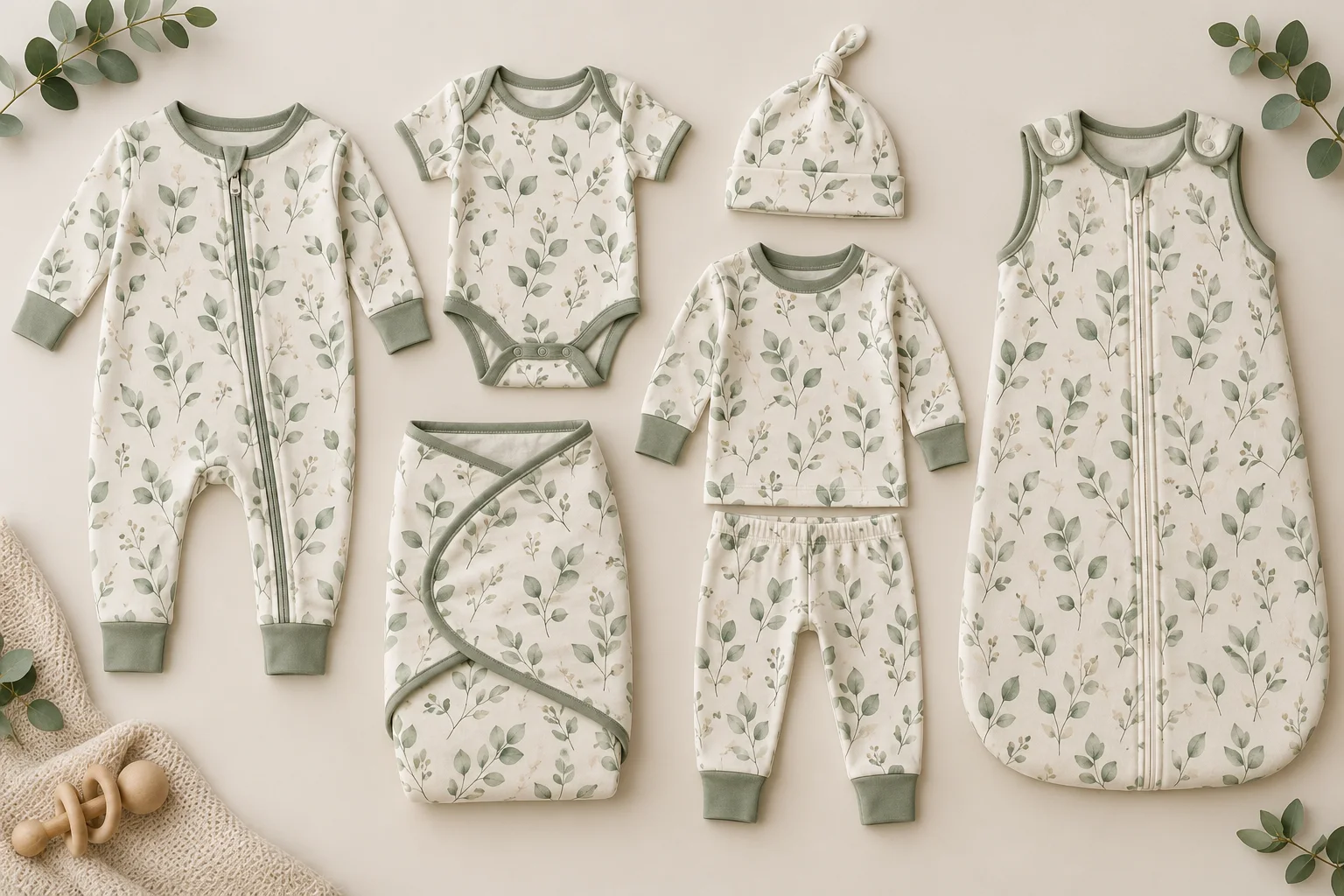
Expand one validated product into a coordinated collection
Once a hero product begins to sell, its approved fit, fabric and design language can guide matching rompers, bodysuits, pajamas, sleep bags, swaddles or accessories. Reusing compatible materials, colors and prints can simplify development and help the collection look intentional while controlling inventory risk.
What to send your babywear product development partner
Send whatever you already have: reference photos, a hand sketch, print artwork, an existing garment, preferred fabrics or a short written description. Also include the target market, age range, estimated quantity, target price and desired launch date. If some details are uncertain, identify them as open questions so the manufacturer can recommend realistic options.
Your idea is enough to start the conversation
You do not need to become a fabric expert or pattern maker before contacting a manufacturer. You need a clear customer, a product direction and a partner capable of turning those ideas into practical specifications. RUIXING supports material selection, pattern and sample development, custom printing, private labels, packaging, bulk production and quality control in one coordinated process.
FREQUENTLY ASKED QUESTIONS
Questions buyers ask
Can I start a babywear collection without a tech pack?+
Yes. Reference images, a sketch or a clear written product idea can start the conversation. The manufacturer can help organize material, measurements, construction, branding and packaging into a development brief and sample. Those details still need to be documented and approved before production.
What information does a startup need to send a baby clothing manufacturer?+
Share the product type, target customer and market, age or size range, fabric preference, reference images, estimated quantity, target price, branding needs and launch timing. Uncertain details can remain open for recommendations.
How does a market-tested base style help a new brand?+
It provides an established construction and fit direction that can reduce unnecessary development variables. The brand can still customize fabric, color, print, labels, packaging and selected design details.
What is RUIXING's MOQ for startup babywear brands?+
Selected projects can start from 50 pieces per style. The workable MOQ depends on fabric availability, custom dyeing or printing, size ratio, labels and packaging.
How long does babywear sample development take?+
A sample may be developed in approximately 3–7 days after the key material, construction and artwork details are confirmed. Complex custom fabrics, prints or revisions may require additional time.
Who issues the Children's Product Certificate for the US market?+
The US importer or domestic manufacturer is responsible for determining the applicable rules and issuing the Children's Product Certificate based on results from a CPSC-accepted third-party laboratory. The factory can support agreed product and production records, but it does not replace the importer's compliance responsibility.