
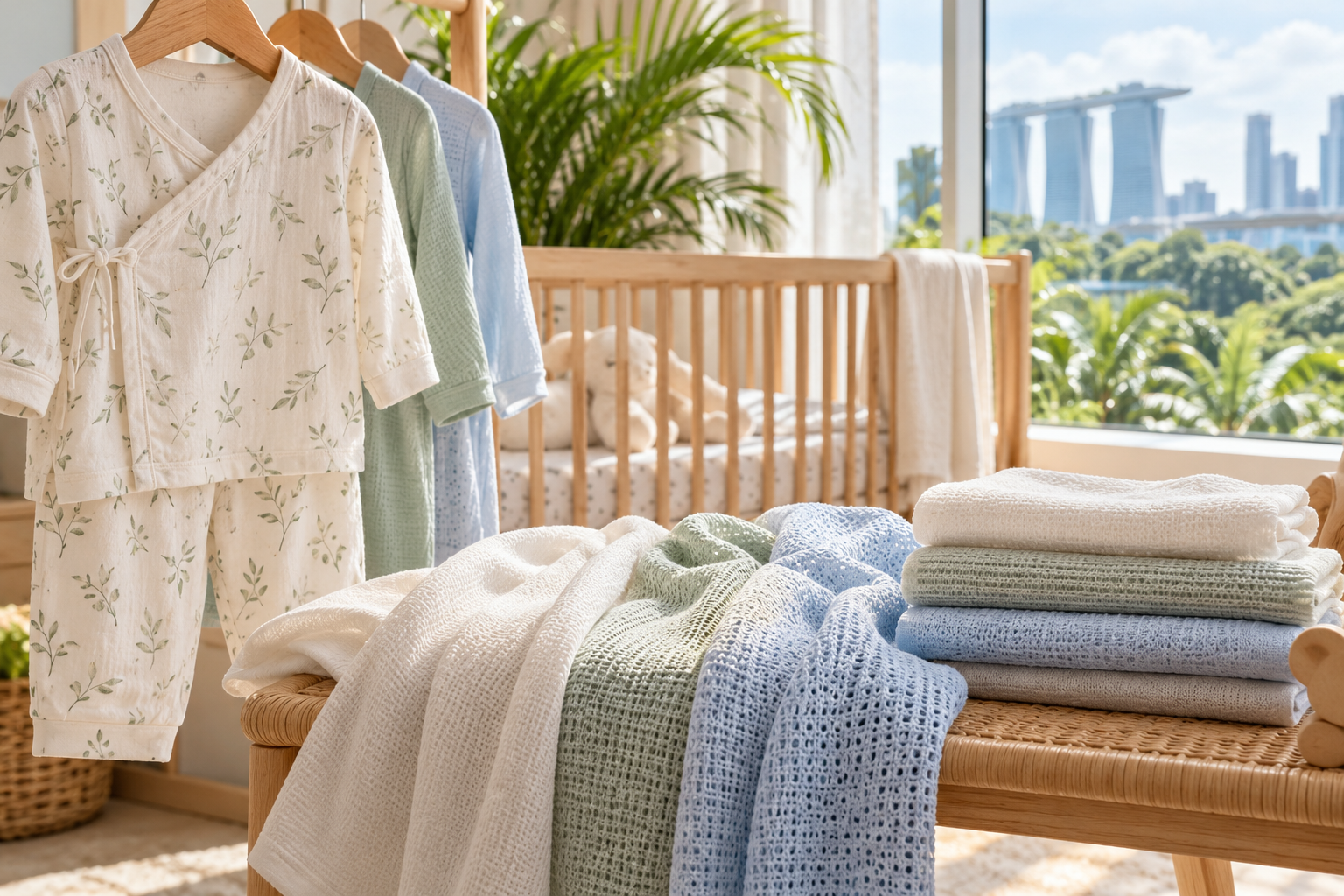
A fabric can feel exceptionally soft in the hand and still be too warm for daily babywear in Singapore. Softness describes surface sensation; thermal comfort depends on the complete system of fiber, yarn, knit structure, fabric weight, airflow, moisture behavior, garment fit and the number of layers worn.
Singapore is warm and humid throughout the year
Singapore's Meteorological Service describes the climate as tropical, with high and relatively uniform temperatures, abundant rainfall and high humidity year-round. In humid air, evaporation is less effective, so fabric and garment decisions that support airflow and moisture movement become especially important.
Softness and breathability are different properties
A smooth surface can come from fine yarn, fiber choice or finishing, but none of these automatically proves that air moves easily through the fabric. Buyers should evaluate hand feel together with fabric structure, weight, thickness and air permeability rather than using softness as the only comfort claim.
GSM changes how the fabric behaves
GSM means grams per square metre and describes fabric weight, not quality by itself. A higher-GSM knit may feel substantial and premium but can retain more warmth. A lighter option may suit tropical daytime wear, provided it still meets opacity, recovery, durability and construction requirements.
Knit density and thickness can reduce airflow
Two fabrics with similar fiber content may feel different because their loops, yarn size and finishing are different. A compact, dense knit can restrict airflow even when the surface feels silky. Request physical swatches and compare them in the intended garment construction.
Garment design can add hidden warmth
Double layers, enclosed feet, fold-over cuffs, tight fits, wide bindings and lined panels can increase heat retention. A fabric selected for an air-conditioned sleep environment may not be the right choice for outdoor daytime wear. Define the use scenario before confirming the pattern.
Moisture management needs a complete test
Absorbency, spreading and drying are related but not identical. A fabric may absorb moisture yet stay damp if the structure and environment slow evaporation. Compare samples after washing and assess drying time, cling, drape and comfort under realistic local conditions.
Build a Singapore-focused sample brief
Tell the manufacturer the product is intended for Singapore, whether it is for sleep or daytime wear, the expected air-conditioning environment and the desired fit. Compare at least two GSM or knit options, then test complete garments after laundering before approving bulk production.
FREQUENTLY ASKED QUESTIONS
Questions buyers ask
Is bamboo babywear always cooling?+
No fabric is automatically suitable for every climate. Bamboo viscose may offer a smooth hand feel and fluid drape, but comfort still depends on GSM, knit density, layers, fit, finishing and the wearing environment.
What GSM is best for babywear in Singapore?+
There is no single universal GSM. The right range depends on knit structure, opacity, stretch, garment type, fit and whether the product is designed for air-conditioned sleep or warm daytime use. Physical sample comparison is essential.
Why can two fabrics with the same composition feel different?+
Yarn size, knit construction, density, finishing, thickness and stretch can change airflow, drape and heat retention even when the fiber percentages are identical.
What should a Singapore babywear brand test before production?+
Compare complete washed garments for weight, airflow, drying time, cling, recovery, opacity and comfort in the intended environment, not only the softness of an unwashed swatch.