
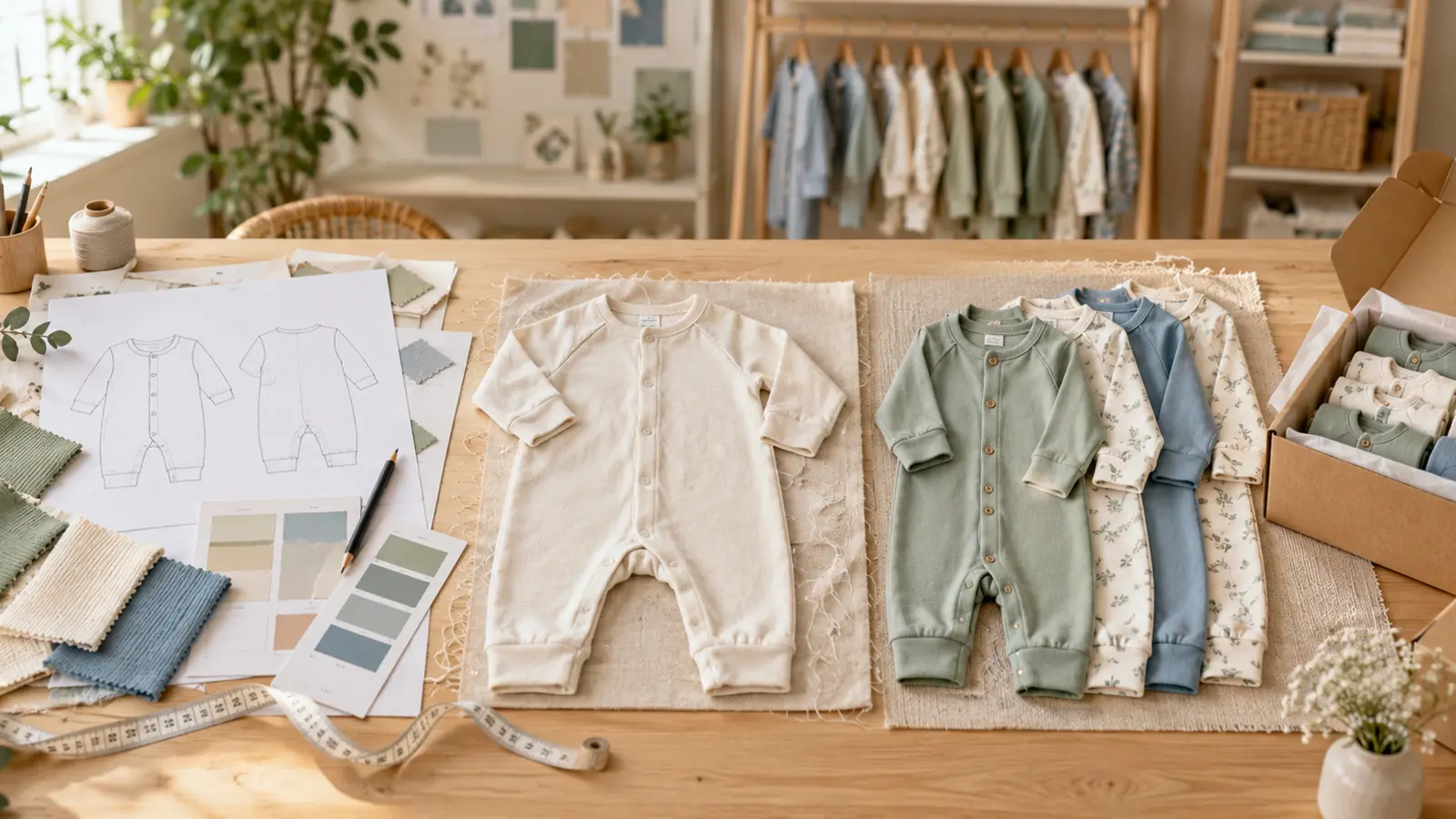
A custom baby clothing order does not move directly from an idea to a sewing line. Before bulk production begins, the brand and manufacturer need to align the product brief, fabric, measurements, construction, artwork, labels, packaging and approval standard. Understanding each stage helps buyers set a realistic launch date, avoid preventable delays and compare manufacturers on more than a promised delivery number.
Start with the launch date and work backward
Begin with the date the finished goods must reach your warehouse, not only the date you hope production will finish. Allow time for product development, sample review, revisions, bulk production, inspection, packing and international transport. The shipping method and destination can materially change the final calendar, so confirm the required arrival date when requesting a quotation.
Stage 1: Build a complete product brief
A useful brief includes the garment type, target market, age or size range, fabric preference, reference images or tech pack, estimated quantity, target price, print or color direction, branding, packaging and desired delivery date. A clear brief lets the manufacturer identify missing decisions early. If you do not have a complete tech pack, RUIXING can help organize the open material and construction details before sampling.
Stage 2: Confirm fabric and components
The factory then checks fabric composition, knit structure, GSM, stretch, recovery, color, print method and availability. Custom dyeing, original prints, special zippers, labels or retail packaging may need separate development and minimum quantities. Stock materials can shorten the timeline, while custom materials require additional approval steps such as lab dips, strike-offs or component samples.
Stage 3: Develop and review the first sample
After the key specifications are confirmed, an initial babywear sample may be prepared in approximately 3–7 days for suitable projects. Timing depends on fabric availability, pattern complexity, print development and trim requirements. The first sample should be reviewed for measurements, fit, construction, function, artwork scale, color direction and workmanship—not only overall appearance.
Stage 4: Consolidate sample revisions
Send one complete feedback list with annotated photos and measurable changes. Separate essential corrections from optional preferences, and confirm whether a revised sample is required. Repeatedly adding new design changes after each sample can extend the schedule because pattern, material consumption, artwork and costing may all need to be updated.
Stage 5: Approve the production standard
Bulk production should begin only after the brand approves the final sample, measurement chart, fabric or color standard, print artwork, labels and packing instructions. Record every approved detail in writing. This reference package gives production and quality-control teams one standard to follow and reduces disagreement later.
Stage 6: Prepare materials and schedule production
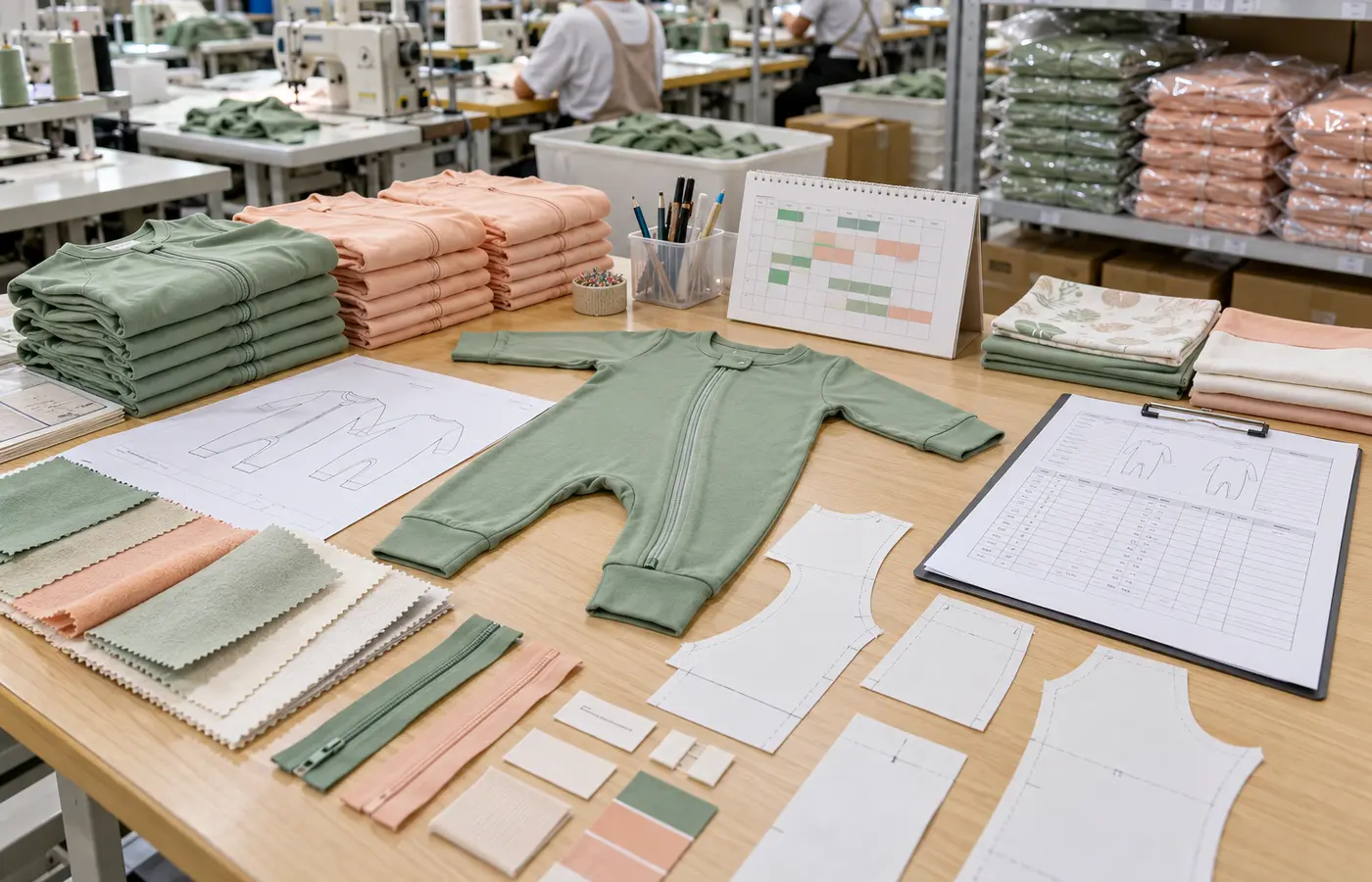
The manufacturer orders or allocates bulk fabric, trims, labels and packaging, then plans cutting and sewing capacity. Material lead time often runs in parallel with production preparation, but it cannot always begin before approvals or deposits are complete. Confirm which materials are in stock and which are made specifically for your order.
Stage 7: Cut, sew and inspect the bulk order
For an approved and production-ready order, RUIXING commonly plans around a 25-day production lead time, subject to quantity, materials, customization and factory schedule. The process includes fabric and cut-part checks, sewing, in-line quality control, finishing, measurement review and final inspection. Complex collections or late changes can require more time than one established style.
Stage 8: Pack, release and ship
After final approval, garments are folded and packed according to the confirmed label, polybag, carton and assortment requirements. The buyer should confirm the shipping mark, carton details, delivery term and freight method before release. Express, air and sea freight have different transit times, costs and customs arrangements, so transport should be planned separately from the factory production lead time.
How to keep a babywear project on schedule
Choose one decision maker, send complete feedback, approve colors and artwork promptly, avoid changing the specification after sample approval and confirm payment or shipping documents on time. Ask the factory for milestone dates rather than one final promise: material approval, sample approval, cutting, sewing, inspection and shipment. A transparent timeline makes delays visible early enough to manage them.
Ask for a timeline built around your actual product
No single lead time applies to every private-label baby clothing order. A low-MOQ bamboo romper using an available fabric follows a different path from a multi-style collection with custom dyeing, original prints and retail packaging. Send RUIXING your product references, quantity, customization needs and target arrival date so the team can map the practical sampling and production sequence before you commit.
FREQUENTLY ASKED QUESTIONS
Questions buyers ask
How long does custom baby clothing production take?+
The complete timeline depends on product development, material availability, sampling, revisions, order quantity, customization and shipping. For an approved production-ready order, RUIXING commonly plans around a 25-day production lead time, but the full project should also include sampling and transport.
How long does a baby clothing sample take?+
A suitable initial sample may be prepared in approximately 3–7 days after the essential fabric, pattern, construction and artwork details are confirmed. Custom materials, prints or complex designs may take longer.
What usually delays a private-label baby clothing order?+
Common causes include incomplete specifications, unavailable materials, slow artwork or color approval, fragmented sample feedback, design changes after approval, custom label or packaging lead times and late payment or shipping instructions.
Can low-MOQ baby clothing be produced faster?+
A lower quantity does not automatically mean a shorter project. Stock fabric and an established construction can help, but custom dyeing, printing, labels, packaging and sample revisions still need their own setup and approval time.
When should a brand contact a baby clothing manufacturer before launch?+
Contact the manufacturer early enough to include development, at least one sample review cycle, material preparation, bulk production, final inspection and shipping. Working backward from the required warehouse arrival date creates a safer schedule.