
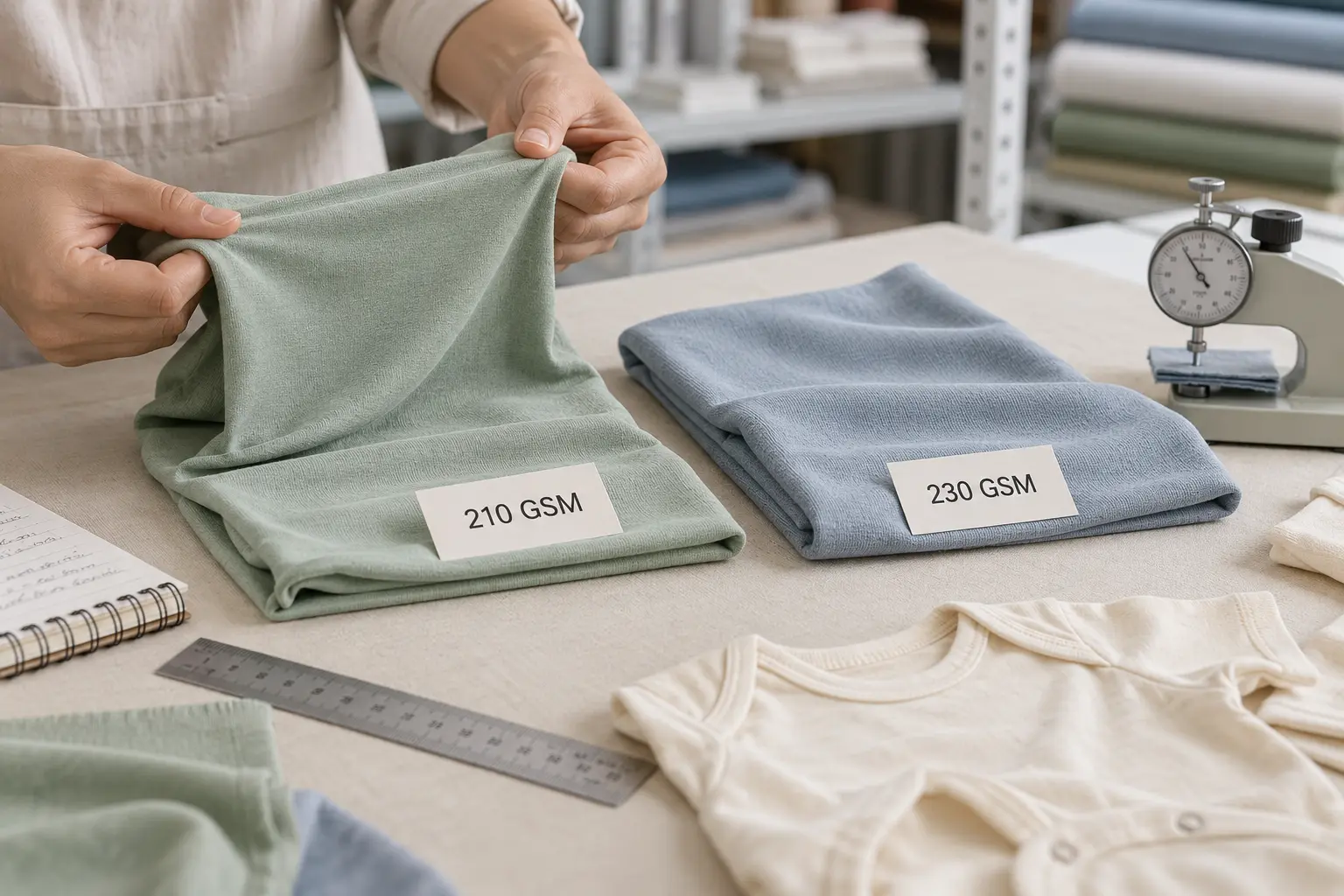
GSM measures the weight of a fabric in grams per square metre. It is useful, but it does not describe the complete fabric. Two bamboo knits with exactly the same GSM can have noticeably different thickness, density, softness, stretch, recovery and drape. For babywear brands comparing 210 GSM and 230 GSM options, the most reliable decision comes from the complete fabric specification and physical sample testing—not the GSM number alone.
What GSM actually measures
GSM means grams per square metre. It tells you how much one square metre of fabric weighs, but it does not directly measure thickness, softness, warmth, opacity, stretch or quality. A higher GSM often contains more material, yet the final hand feel still depends on how the yarn is selected, knitted and finished.
Yarn count changes the surface and thickness
Yarn count describes the fineness or thickness of the yarn used to make the fabric. Fine yarns can create a smoother, more refined surface, while thicker yarns may create a fuller or more textured construction. Two fabrics can reach the same GSM by using different yarn counts and knitting settings, so they may not feel alike in the hand.
Knitting density affects compactness and airflow
Knitting density describes how closely the stitches are formed. A compact knit may feel dense, stable and substantial, while a more open construction can feel lighter, softer or more breathable even at a similar weight. Density also influences opacity, stretch, recovery and how the fabric behaves during cutting and sewing.
Knit structure changes stretch and drape
Single jersey, rib, interlock and other knit structures arrange yarns and loops differently. That construction changes the way a bamboo fabric stretches, returns to shape, hangs on the body and resists curling. Comparing GSM without confirming the knit structure can lead to an inaccurate expectation of the finished garment.
Finishing can transform the final hand feel
After knitting, fabric may be washed, softened, compacted, heat-set or stabilized. These finishing processes can change shrinkage, width, surface softness, drape and dimensional stability. A very soft initial touch is not enough; the buyer should confirm whether that feel and shape remain consistent after laundering.
How 210 GSM and 230 GSM bamboo fabrics may differ
A 230 GSM option may feel fuller and provide more coverage, but it is not automatically thicker, softer or better than a 210 GSM option. A dense 210 GSM knit can feel more compact than a fluid 230 GSM knit made with a different yarn and construction. The intended product matters: a fitted zipper romper, lightweight daytime style and sleep set may each need a different balance of coverage, stretch, recovery and drape.
Compare actual fabric samples before choosing
Request physical swatches from the same supplier and compare them under the same conditions. Check thickness, surface feel, opacity, four-way stretch, recovery after stretching, drape and edge curling. Then sew the shortlisted fabrics into the intended garment because seams, bindings, zippers and fit can change the way the material performs.
Test again after washing
Wash and dry the sample using the care method planned for the final product. Measure shrinkage, twisting, pilling, color change, softness and recovery before and after laundering. A fabric that feels impressive before washing may relax, lose shape or change surface character afterward, while another option may become more stable and comfortable.
Use a complete specification for quotations and bulk approval
Record the fiber composition, yarn count where available, knit structure, finished GSM and width, stretch and recovery, shrinkage tolerance, color or print standard and finishing requirements. Approve a physical fabric swatch or garment sample as the reference for bulk production. This makes supplier quotations more comparable and gives quality control a measurable standard.
The best choice is the fabric that fits the product
There is no universal winner between 210 GSM and 230 GSM bamboo fabric. The right option depends on the garment type, fit, season, climate, target price and customer expectation. RUIXING can prepare fabric options and samples so brands can compare real thickness, stretch recovery and wash performance before approving production.
FREQUENTLY ASKED QUESTIONS
Questions buyers ask
Is 230 GSM bamboo fabric always thicker than 210 GSM?+
Not always. GSM measures weight per square metre, while thickness also depends on yarn count, knitting density, knit structure and finishing. Physical swatches should be compared before making a decision.
Which GSM is better for bamboo baby pajamas?+
There is no single best GSM for every pajama. The right choice depends on the knit structure, fit, season, climate, opacity, stretch recovery and applicable product requirements. Compare complete washed garment samples in the intended construction.
Why do two bamboo fabrics with the same GSM feel different?+
They may use different yarn counts, knitting densities, loop structures, elastane ratios or finishing processes. Those variables change softness, compactness, stretch, recovery and drape even when the measured GSM is identical.
What should a brand test before approving bamboo fabric?+
Compare composition, structure, finished GSM, width, thickness, opacity, stretch, recovery, shrinkage, spirality, pilling, colorfastness, drape and performance after washing. Then confirm the fabric in the actual garment sample.
Can RUIXING provide 210 GSM and 230 GSM fabric samples?+
Fabric availability depends on the required composition, knit, color and finish. Share the product type and target market, and RUIXING can recommend suitable options for sample comparison before bulk production.